
Course · Ad Creatives
2) Breakthrough Advertising: How to Sell
High-Performance Ad Creative System:
2) Breakthrough Advertising: How to Sell
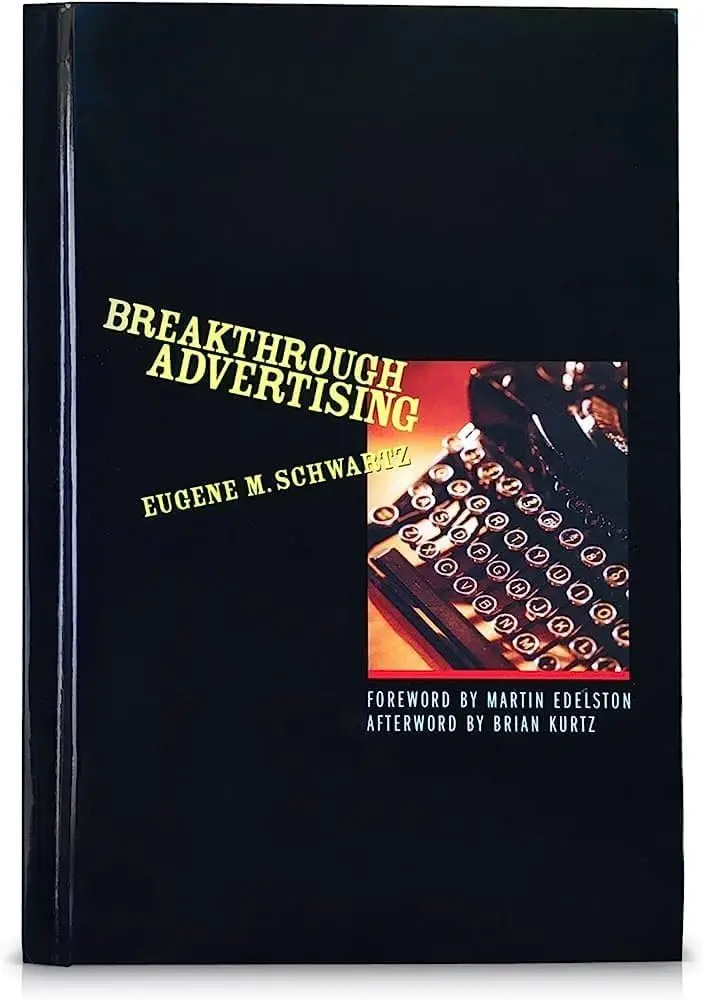
- What is Copywriting?
- 5 key quotes from the book
- Mass Desire:
‘The Force That Makes Advertising Work’ - Your Prospect’s State of Awareness
- The Sophistication of your Market
- The 7 Basic Techniques of Breakthrough Advertising
Buy here:
https://breakthroughadvertisingbook.com/
1) What is Copywriting?
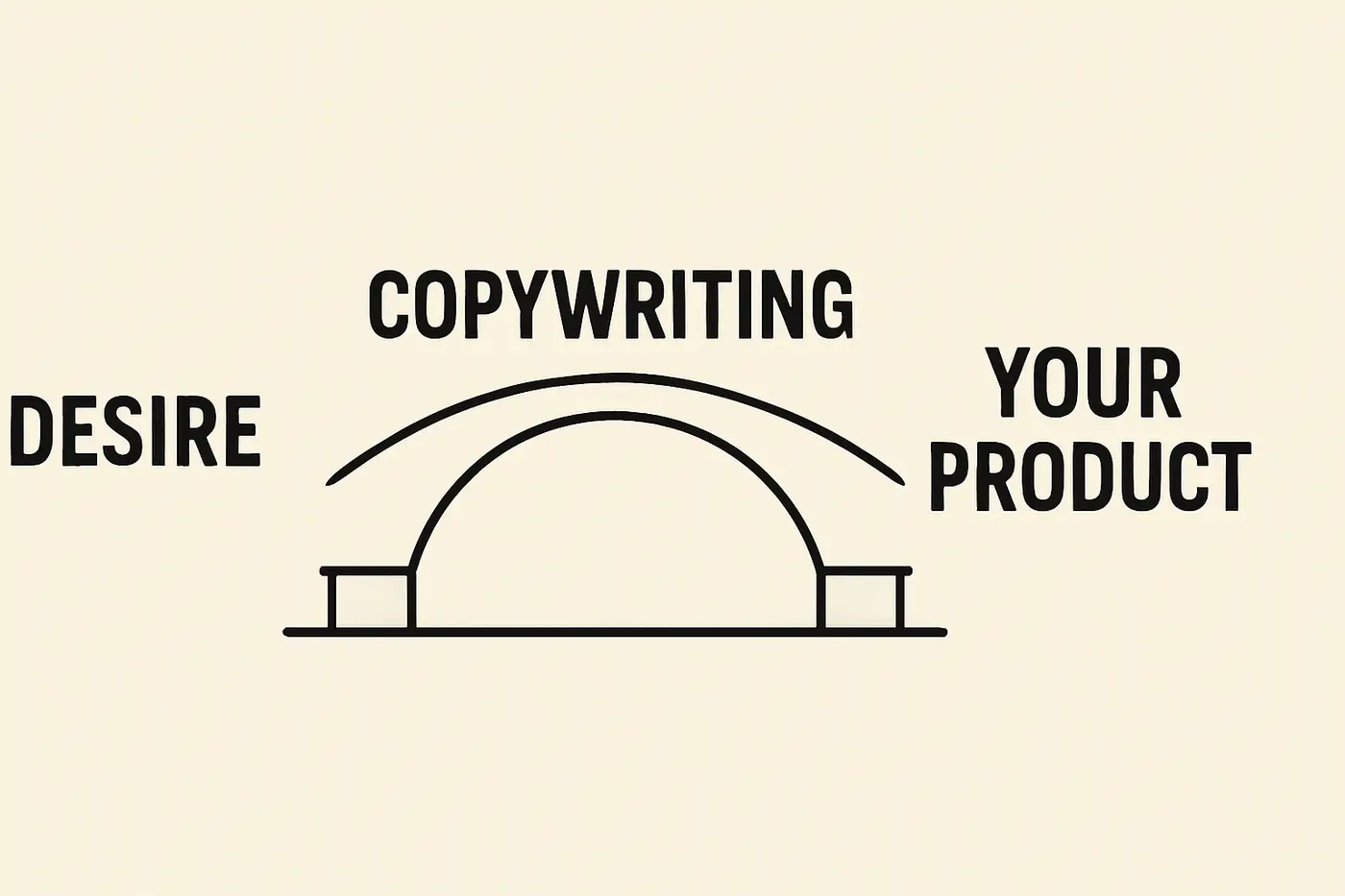
Copywriting is the process of channeling an existing desire towards your product.
- Remember the word ‘existing desire’
- He never says ‘create desire’
2) 5 key quotes from the book
- "Copy is not written. Copy is assembled."
Great copy doesn’t come from creativity, it comes from research, insight, and structure. - “The greatest mistake marketers make is trying to create demand.”
This is the central thesis of the book. Desire exists in the market. Your job is to channel it, not manufacture it. - "Your ad must enter the conversation already taking place in the customer’s mind."
You must meet the reader where they are, emotionally and intellectually. - "Every product appeals to two, or three, or four of the mass desires already in the hearts of millions - and those desires are permanent."
Security, beauty, status, freedom: These are eternal, and your product must align with them to scale and appeal to a mass audience. - "The product is the mechanism through which the desire is satisfied."
You're not selling a product, you're selling the fulfillment of a desire. The product is just the delivery system. - "You cannot create advertising that works without first knowing the state of awareness and sophistication of your market."
This quote forms the basis for Schwartz’s 5 stages of awareness, a game-changer for angle research and messaging. You must know how “cold” or “warm” your prospect is to choose the right message.
3) Mass Desire: ‘The Force That Makes Advertising Work’
What is mass desire?
A deep and shared emotional want.
You can’t create these desires, they already exist in your audience.
As Eugene says…
Our job as advertisers is to:
- Identify which mass desire your product satisfies
- Intensify that desire through copy and creative
- Channel it toward your product as the solution
Examples of mass desire?
Desire for Sexual Companionship / Attractiveness
→ "Look good", "Be desirable", "Feel sexy"
Desire for Status & Prestige
→ "Luxury", "Exclusive", "Be admired"
Desire for Comfort & Security
→ "Sleep better", "Feel safe", "Reduce anxiety"
Desire for Health & Vitality
→ "Boost energy", "Look younger", "Live longer"
Desire for Social Approval / Belonging → "Be part of something", "Join the movement", "Don't miss out"
4) Your Prospect’s State of Awareness
What is the state of awareness?
It’s basically how much your prospect knows about:
- Their problem 90%
- Possible solutions 70%
- The product you sell 15%
- Your brand 1%
And the book tells you to speak differently depending on the state of awareness.
- Think about a fan that has bought from you 3 times, and think about someone who is your potential customer but doesn’t even know he has a problem
So we have 5 states of awareness
- Completely unaware
- Problem aware
- Solution aware
- Product aware
- Most aware
1. Completely Unaware
→ Doesn’t know he has a problem
Example: A person that has acne but doesn’t even see it as a problem and is not looking for solutions.
What ad do they want to click? Not much but if they would click anything it would be a “call out” ad.
Example: “Do you have acne? Here are 5 possible solutions”.
2. Problem-Aware
→ Knows they have a problem, but doesn’t know there are solutions
Example: A person that has acne, and knows it’s a problem, looks bad and hurts. But he doesn’t know about any solution.
What ad do they want to click? An informational ad that introduces the idea of possible solutions or introduces the idea that you have the final solution to acne. They don’t want to click an ad with a discount or an ad where you tell them your solution is the best buy now, no, they need to first know about the solutions. Increase Belief.
Example: “Did you know that acne can be solved naturally by just drinking this rare green tea?”
Example: “If your lower back hurts after sitting all day, it’s not aging. It’s likely a muscle imbalance you can fix at home.”
Example: “Constant bloating isn’t just ‘eating too fast’. It could be your gut microbiome begging for help.”
Example: “Your jawline isn’t gone — it’s just hidden under inflammation. Here’s how to bring it back in 10 minutes a day.”
Example: “If acne is making you avoid mirrors, you’re not alone. But there’s a way to fix it without harsh chemicals.”
3. Solution-Aware
Knows solutions exist, but not your product.
Example: A person that has acne, and knows it’s a problem, looks bad and hurts. And also knows that multiple different solutions exist, but they don’t know which solution to pick (serum, cleanser, benzoyl peroxide, apple cider vinegar, tea tree oil, …)
What ad do they want to click? An ad creative that shows your product as the best / unique solution to their problem. You have to stand out from competitors. (US vs THEM)
Example Acne: “Most acne products dry your skin out. Ours heals it from underneath, using fermented green tea and zero alcohol.”
Example Back Pain: “You’ve tried stretches and painkillers. But this posture-correcting seat aligns your spine without you doing anything.”
Example Sleep: “Melatonin puts you to sleep - but doesn’t keep you asleep. That’s why we created a time-release formula that mimics your natural sleep cycle.”
Example Bloating: “Probiotics take weeks. Our enzyme complex works within 30 minutes to flatten the bloat - even after pizza.”
Example Jawline: “Gua Sha? Too slow. Our sculpting tool uses microcurrents to drain puffiness in under 5 minutes a day.”
Example Jewelry: “Wear it in the ocean. Keep it on in the shower. It won’t fade - ever.”
4. Product-Aware
Knows your product but isn’t convinced yet. (this would fit very well into retargeting ads)
Example: A person that has acne, and knows it’s a problem, looks bad and hurts. And also knows that multiple different solutions exist, and they have decided that your solution is the go-to but they have many brands to choose from and are not sure about which brand is the best.
What ad do they want to click? An ad creative that shows proof, social validation, reviews, comparison, …
Example: “Over 10,000 women are sleeping better with Manel Sleep - here’s what they say.”
Example: “Trusted by 50,000+ men who wanted jewelry that lasts.”
Example: “It’s the only shirt my boyfriend wears now.”
- Verified review from Anna.
Example: “Still not sure? These are real results from our community.”
Example: “Try it risk-free. If it fades, we’ll refund you. No questions asked.”
5. Most Aware
Knows your product and wants it, just needs a reason to act now.
Example: A person that has acne, and knows it’s a problem, looks bad and hurts. And also knows that multiple different solutions exist, and they have decided that your solution is the go-to PLUS also they have made the decision that your product is the best in the market for them, but they need a bit of push to finish their purchase.
What ad do they want to click? An ad creative that shows urgency, a discount, a reason to buy.
Example: “Today only | 20% off our best-selling sleep product. Don’t miss it.”
Or you’ll close these people with email, or with a flash campaign, …
5) The Sophistication of your Market
Market sophistication is about how many similar promises your market has seen already.
The more saturated the market, the more creative, unique, and advanced your messaging must become.
Think about a girl with the perfect body. If you try to compliment her by just saying “you have a beautiful body”, she will not even react. That compliment is burned. She heard it 1,000 times. You don’t stand out. But if you tell the same girl “It amazes me how you combine the color of your finger nails with your hand bag. That’s the kind of detail only someone with real taste would create” then she will be surprised and you might have a chance.
Example: Fat Loss,
- 1970: Eat less, move more.
- 2026: Boost your metabolism naturally with this science-backed formula - no crazy diets needed.
Level 1 Sophistication: You’re the first one in the market
Rare. Doesn’t usually happen.
Basically, the market is yours.
Example: “The first cream that erases acne overnight.”
Example: “Introducing the electric toothbrush!”
Level 2 Sophistication: Others have made a promise, but the market is still fresh
You repeat the same promise as your competitors but with a small change, little tweak.
Example: “Cleans your teeth better than a manual brush.”
Level 3 Sophistication: The market is tired of the same promise. Crowded and skeptical market.
You need to show HOW the product actually works.
“Yeah, I’ve heard that before. Prove it ;)”
This has happened with the “make money online” industry.
Now advertisers need to show how to do it differently, or better. And especially, now they need to show a lot of proof and more authentic RAW content.
Example: “Clinically studied dual-formula: Ashwagandha lowers cortisol, while Magnesium Glycinate calms your nervous system — so your brain and body both switch off, fast.”
Example: “The only electric toothbrush with 3 brushing modes and 14-day battery life.”
Example: “Based on the 3x3 Method used by military trainers - 3 movements, 3 rounds, all under 20 minutes. Burn fat while building real functional strength.”
Example: “Backed by 12 dermatologists - our patented peptide blend stimulates collagen production 2x faster than retinol, without irritation.”
Here we need:
- A new mechanism or unique ingredient/process
- Specificity (numbers, timeframes, studies)
- Proof or authority (tests, experts, customer results)
- Clear contrast with competitors (we are better)
Level 4 Sophistication: Saturation, people have seen it all
All the advertisers are shouting.
You must layer multiple benefits or connect your product to a specific identity or lifestyle.
Benefits + Results + Emotional angles.
Example: “For women who want to feel confident without showing everything. Designed for beach clubs, boat days, and elegant escapes - where class matters more than cleavage.”
Example: “Not just workouts. A full lifestyle reboot for high-achievers who don’t have time to waste. Train, recover, and optimize in 90 days - with 24/7 coaching and wearable integrations.”
Example: “Built for entrepreneurs who don’t do ‘to-do lists’. Structure your week, align your priorities, and execute with clarity - in 15 minutes every Monday.”
Level 5 Sophistication: overexposure, the audience is jaded & resistant
People don’t react to direct offers.
To get attention, here we need education, entertainment and re-framing.
Example: “Why most sleep supplements fail - and actually make you more tired. (It’s not about melatonin, it’s about your cortisol curve.)”
Example: “Why ‘sexy swimsuits’ make you feel insecure - and what elegant women wear instead when they want to feel powerful on the beach.”
Example: “Facebook Ads are not dead - but the old way of scaling is. Here’s why ROAS is a trap, and how elite media buyers think in 2025.”
Example: “The anti-aging lie: Your skin doesn’t need more products. It needs the right sequence - and most routines do it backwards.”
Example: “Why 95% of home workouts don’t work - and how 20 minutes of the right movements outperforms 60 minutes of generic training.”
Client example:
The 2-step beauty supplement that’s replacing retinol.
Influencers are swapping botox/retinol for this 2-step beauty miracle.
6) The 7 Basic Techniques of Breakthrough Advertising
These are the 7 ways to make your product sound more powerful, desirable, and unique, even if it’s similar to what’s already out there.
- Intensification
- Identification
- Gradualization
- Mechanization
- Analogization
- Proposition
- Visualization
1. INTENSIFICATION
→ Take the main promise and make it stronger, faster, easier, longer-lasting, more extreme…
Example 1
Before:
“Lose weight with our 30-day program.”
After:
“Shed up to 10kg in 30 days — without starving or killing yourself at the gym.”
Example 2
Before:
“Fall asleep faster with our supplement.”
After:
“Knocks you out in 15 minutes — and keeps you in deep sleep for 7+ hours.”
Example 3
Before:
“Get more energy naturally.”
After:
“Skyrocket your energy in 48 hours — no caffeine, no crash.”
2. IDENTIFICATION
Connect to the reader’s identity, lifestyle, or tribe.
Make them feel seen. Make them feel like this is specifically for them.
Example 1
Before:
“Modest swimwear for women.”
After:
“For women who love luxury, family vacations, and not having to adjust their swimsuit every 10 minutes.”
Example 2
Before:
“Productivity coaching for entrepreneurs.”
After:
“For founders who built a 6-figure business - and wake up exhausted by Slack, emails, and one more Zoom call.”
Example 3
Before:
“Skincare for sensitive skin.”
After:
“For women who read ingredient labels before anything else touches their face.”
3. GRADUALIZATION
Break down a big transformation into small, believable steps.
Make the process to mass desire, gradual. Smart for subscription products and high ticket.
Example 1
Before:
“Transform your body in 12 weeks.”
After:
“Week 1: Sleep better. Week 2: Reduce bloating. Week 3: Wake up with more energy. Week 4: See it in the mirror.”
Example 2
Before:
“Build your profitable eCommerce store.”
After:
“Start with your first sale. Then scale to $100/day. Then turn it into your full-time income.”
Example 3
Before:
“Master Facebook Ads fast.”
After:
“Step 1: Launch your first campaign. Step 2: Test creatives. Step 3: Learn how to scale without killing ROAS.”
4. MECHANIZATION
Explain how it works.
Give a sense that there’s a mechanism, a system, a formula behind the magic, not just hype.
This builds trust, adds logic to emotion, and makes your promise more believable.
Example 1
Before:
“Lose belly fat fast.”
After:
“Targets stubborn belly fat by lowering cortisol and boosting thermogenesis with clinically-backed ingredients.”
Example 2
Before:
“Fix your sleep.”
After:
“Combines glycine + magnesium to calm your nervous system and trigger deep sleep, naturally.”
Example 3
Before:
“Get better at sales.”
After:
“Use our 3-part framework: Diagnose > Amplify > Prescribe, so you close more without feeling pushy.”
5. ANALOGIZATION
Make the unfamiliar feel familiar.
Use comparisons, metaphors, or similes to simplify something complex - or to dramatize it.
This is especially powerful for new categories or abstract ideas.
Example 1
Before:
“Our app uses AI to optimize your schedule.”
After:
“Like having a personal assistant in your pocket - but smarter, and never takes a coffee break.”
Example 2
Before:
“Our coaching system boosts focus.”
After:
“Think of it like mental weight training - each session strengthens your attention span.”
Example 3
Before:
“Blissy’s 2-step nighttime stack.”
After:
“Like a warm bath for your brain + a skin-repair serum from the inside out.”
6. PROPOSITION
Introduce a bold idea, belief, or philosophy that reframes the product.
Think of it like the hill your product dies on.
It should challenge the status quo.
Example 1
Before:
“Work less, earn more.”
After:
“You don’t need more hours. You need higher-leverage systems, and the courage to stop doing low-value work.”
Example 2
Before:
“Better skincare for dry skin.”
After:
“Dry skin isn’t a surface problem - it’s a barrier issue. Fix the barrier, and the glow follows.”
Example 3
Before:
“Ecommerce coaching that works.”
After:
“Scaling isn’t about spending more. It’s about squeezing more profit out of every euro you already spend.”
7. VISUALIZATION
Paint a vivid, sensory picture in the reader’s mind.
Make them see, hear, feel, and live the result — as if it’s already happening.
Example 1
Before:
“Wake up refreshed.”
After:
“You open your eyes to soft sunlight, no grogginess, no headache - just a calm, rested body ready to move.”
(Think of this like the “POV:....” type of ads)
POV: your finger tips touch your cheekbone, and it’s smooth.
Example 2
Before:
“Have more energy throughout the day.”
After:
“Imagine 3PM hits - and you’re still sharp, still smiling, still on top of your game.”
Example 3
Before:
“Travel in style.”
After:
“You step off the plane: linen shirt crisp, sunglasses on, every head turning like you walked out of a Vogue ad.”
Make it vivid.
So, remember the 7 Basic Techniques of Breakthrough Advertising:
- Intensification
- Identification
- Gradualization
- Mechanization
- Analogization , Familiar
- Proposition
- Visualization
Can you see the power of this chapter, applied to your creative and landing page strategies ???
Summary of the steps:
- Define 1 or 2 Mass Desires that your target audience is interested in (be desirable, feel sexy, be admired, feel safe, be more healthy, look younger, live longer, …)
- Identify your prospect’s state of awareness and design creatives and landing pages based on it
- Study the Sophistication of your market, look at the examples of this module again and determine the best way to communicate for your product
- Apply some of the 7 basic techniques of breakthrough advertising