
Workshops · Q4 2026 · BFCM · English · Day 2
6 - Wave Surfing, Intraday Scaling
Q4 2026 WORKSHOP - DAY 2
Wave Surfing, Intraday Scaling

- What Is Wave Surfing?
- Case Studies: 2024 and 2025
- What you need to Wave Surf
- Why practice matters: Developing the “feeling”
- How to execute the strategy
- The Stop-Loss mindset
What Is Wave Surfing?
How much will you spend on Meta the day of Black Friday?
- 1k
- 10k
- 30k
- ???
We can set goals, but nobody knows. The market will tell you.
Wave Surfing, definition: intraday budget management strategy, based on your historical demand patterns, for high demand days.
Basically, how to maximize spend and minimize risk in high intensity moments:
- Budget management on the hour
- Maximize ad spend
- Keep a healthy ROAS
- Follow historical patterns
- Minimize risk of big mistakes
Black Friday is THE MOMENT of the year to do this.
The most important thing is consciously defining your minimum/target ROAS:
- Example:
- Minimum ads manager ROAS: 2.8
- Minimum Meta blended ROAS: 4
If spend is 5k, ROAS must be >3
If spend is 10k, ROAS must be >2.5
If spend is 20k, ROAS must be >2.25
If spend is 30k, ROAS must be >2.15
With this, I have the floor.
If I’m at ads manager ROAS 3.8, I’m underspending.
If I’m at ads manager ROAS 2.1, I’m overspending.
Case Studies: 2024 and 2025
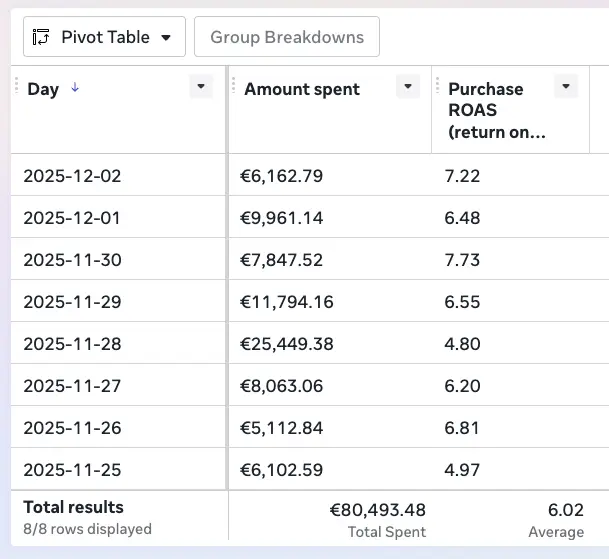
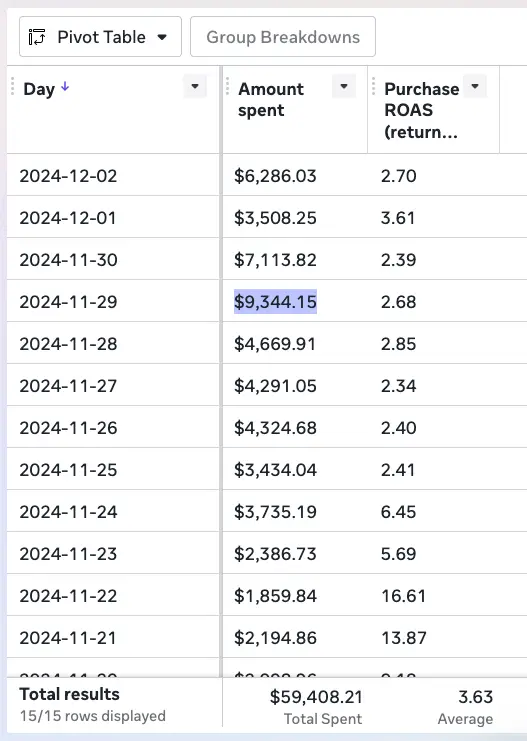
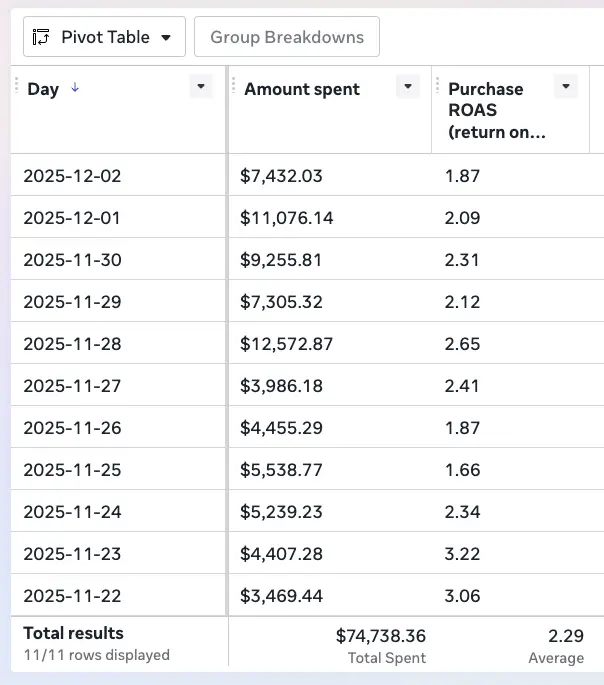
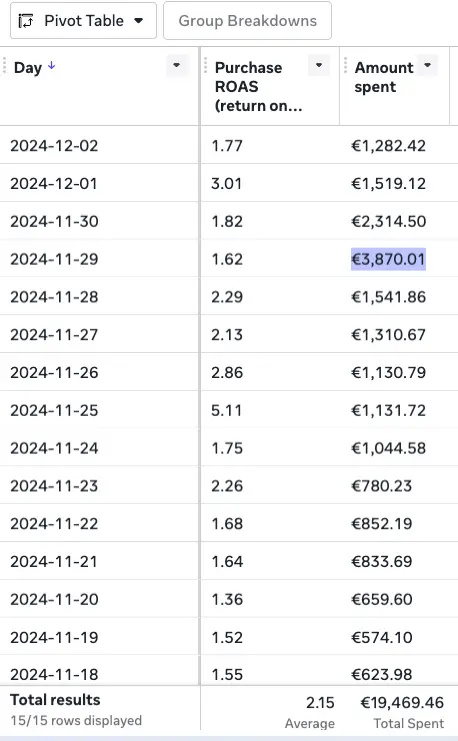
I will first show you the daily budget evolution 20th-30th nov.
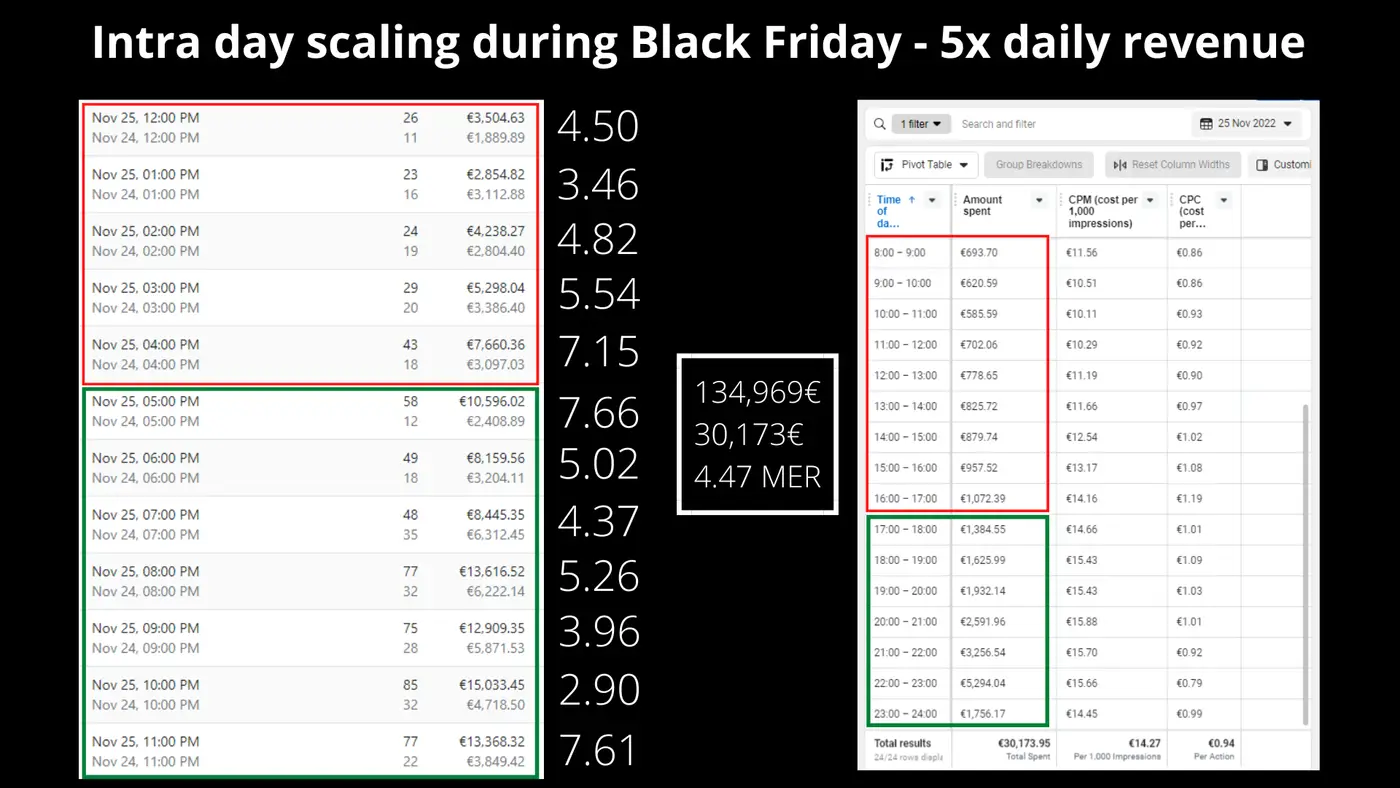
Usual daily spend in evergreen 6-10k, on Thursday double, and on Friday I double the Thursday ad spend:
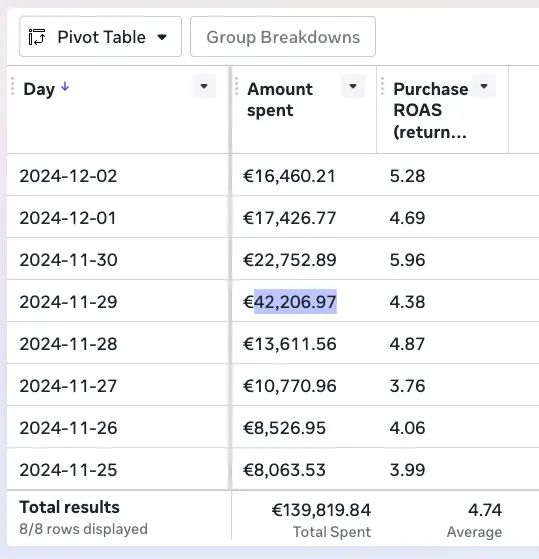
Evergreen €5-6k, Thursday €8k, Friday BF €25k
Evergreen $1.5-2k, Thursday $4.6k, Friday $9.3k
Evergreen $2k, Thursday $4k, Friday $12.5k
2024, lower ad spend scenario:
The POAS (profit on ad spend) client case,
Evergreen 500-750, Thursday 1500, Friday 3800
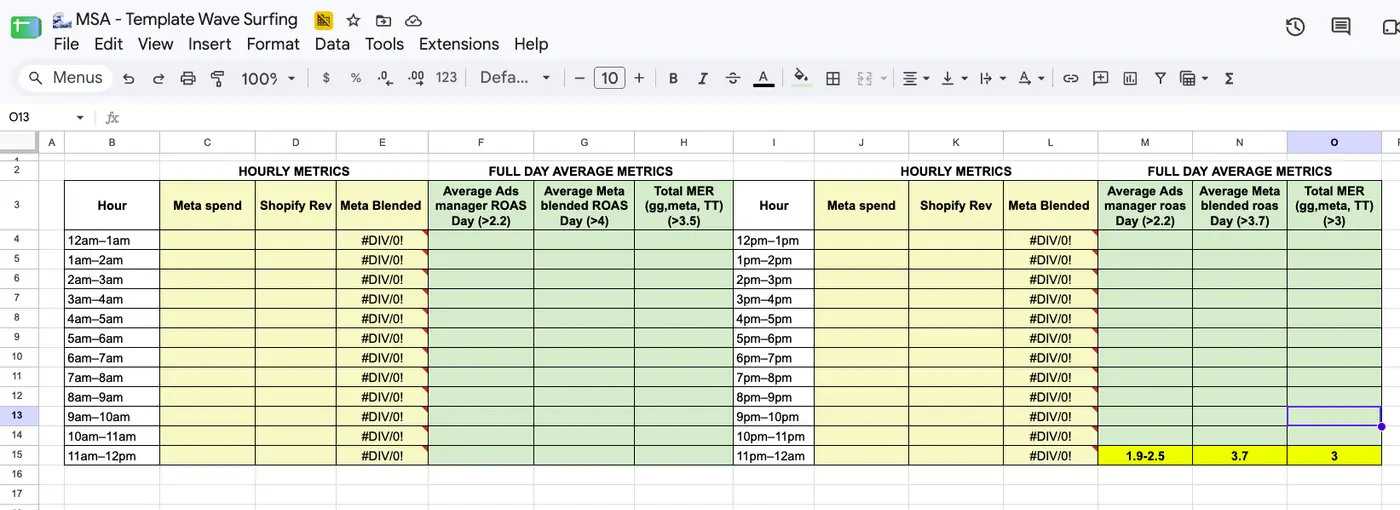
How to maximize ad spend and minimize risk:
Top left -> File -> Make a Copy
Then you personalize it and adapt it to your targets, …
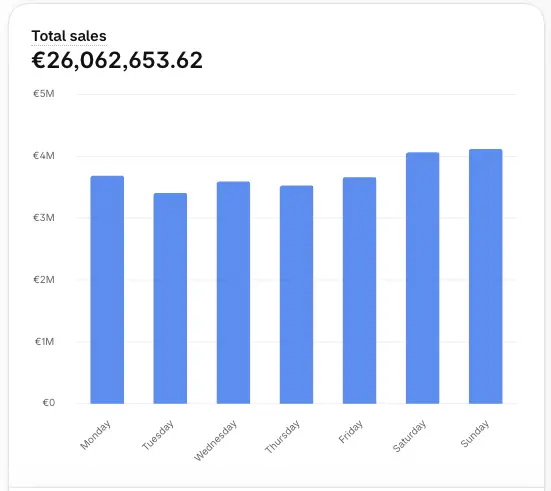
Examples:
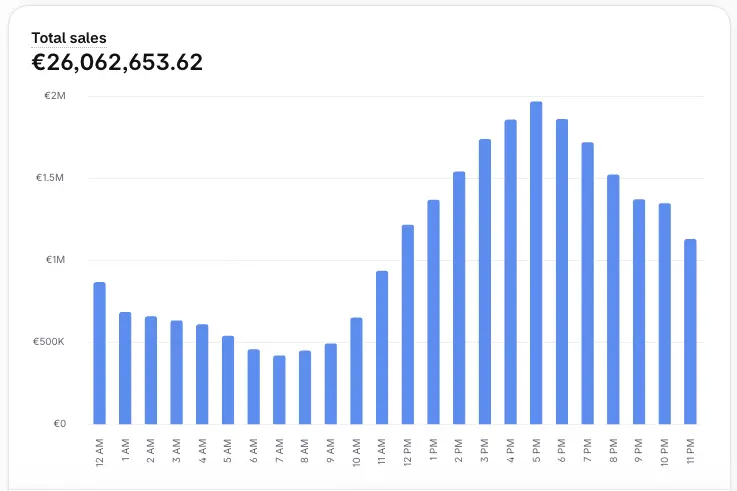
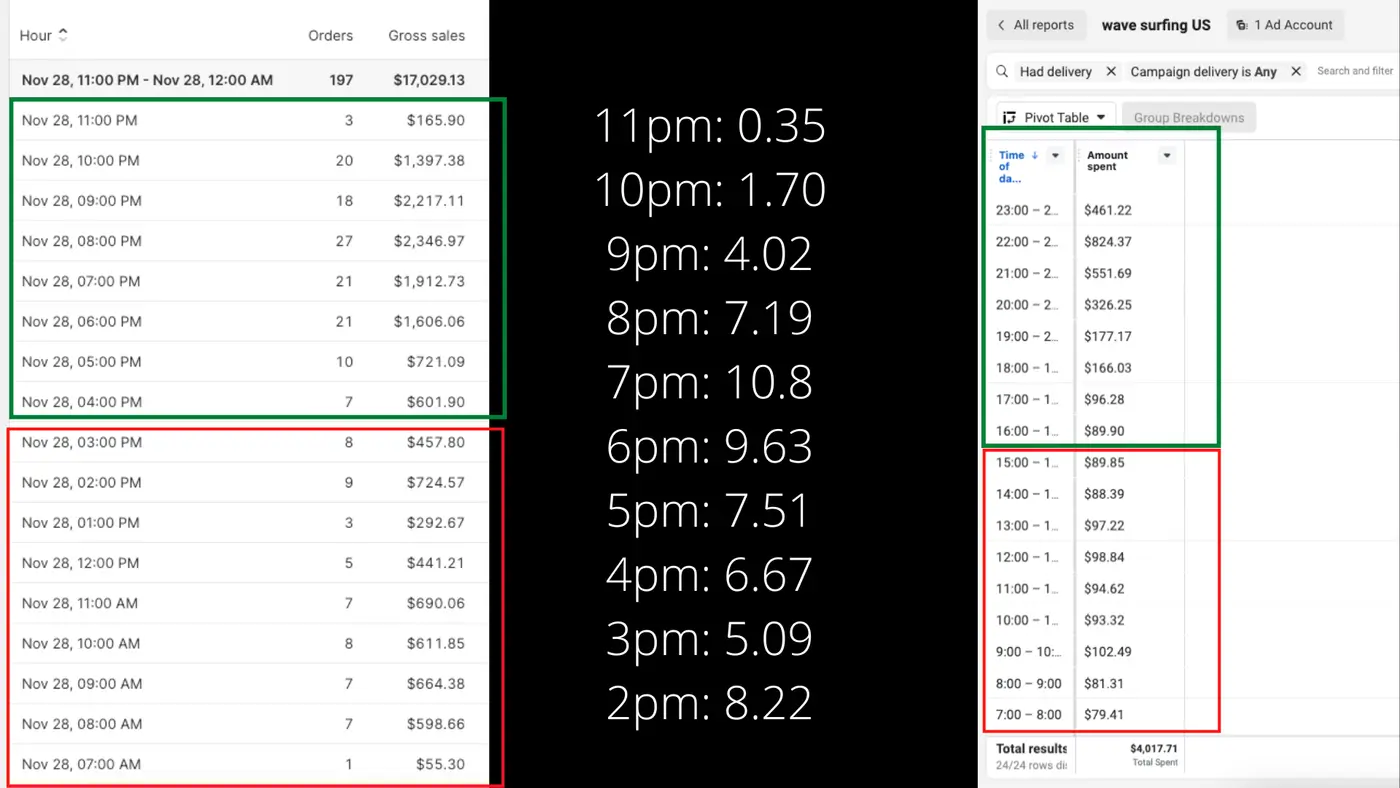
- First I find the historical pattern: Weekends, 1pm-8pm
- Previous BFCM: 2-11pm
Historical: Top hour of day, top day of the week
BFCM
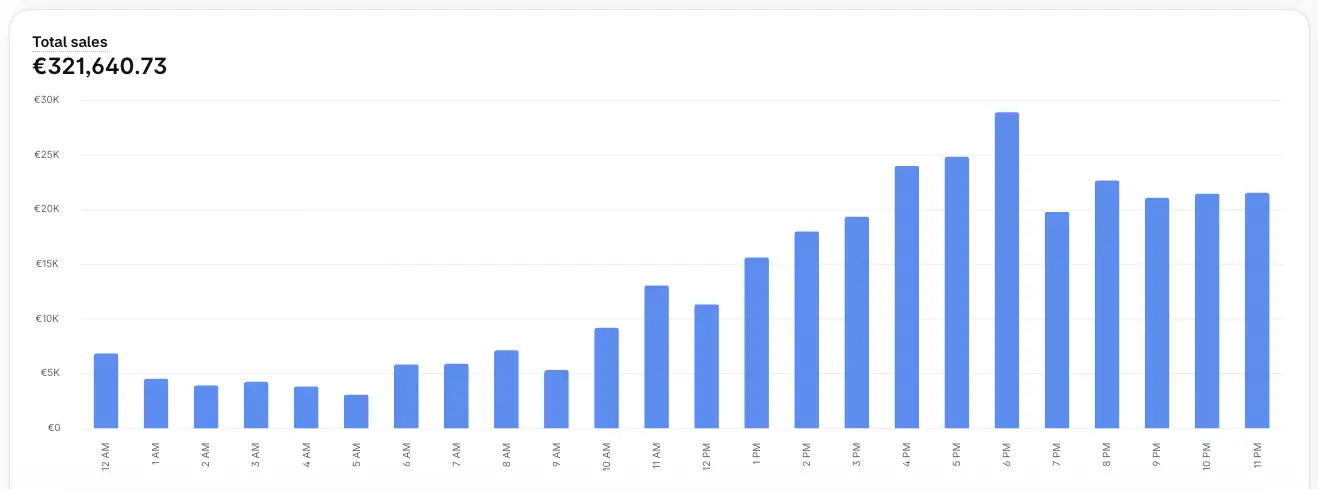
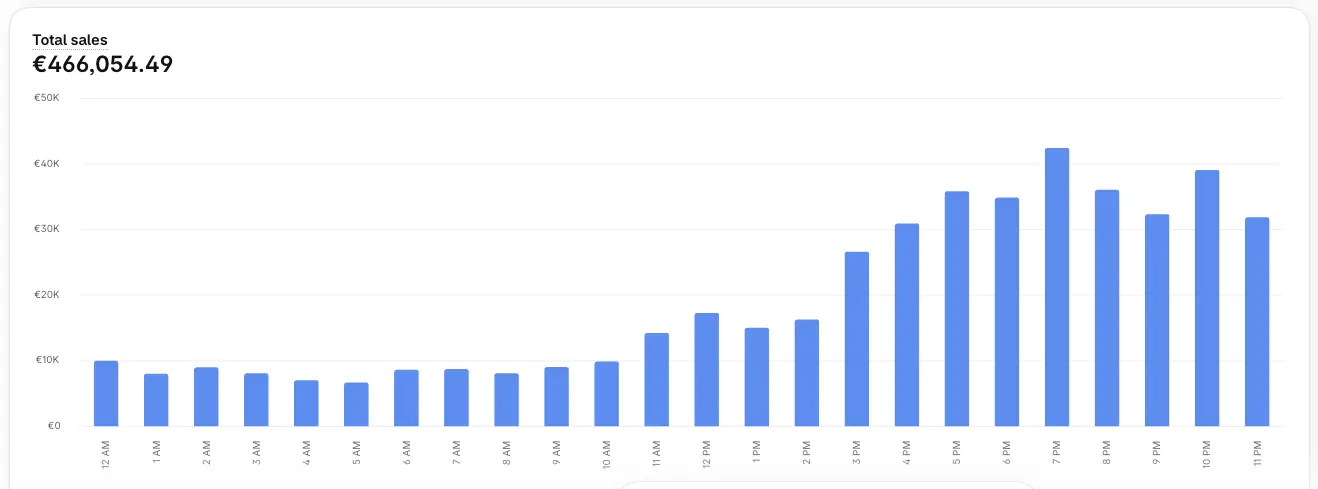
In both cases, the most important hours of my day are 2pm-11pm.
To find this: Shopify, analytics, reports, total sales over time, right hand side, dimensions, hour of day
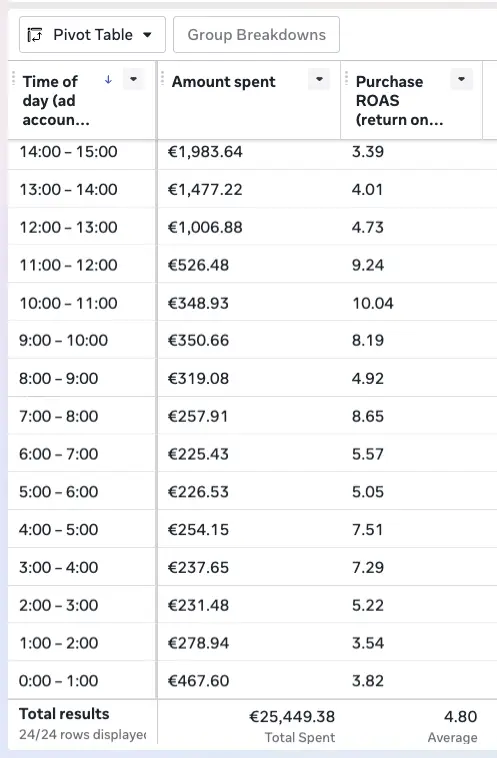
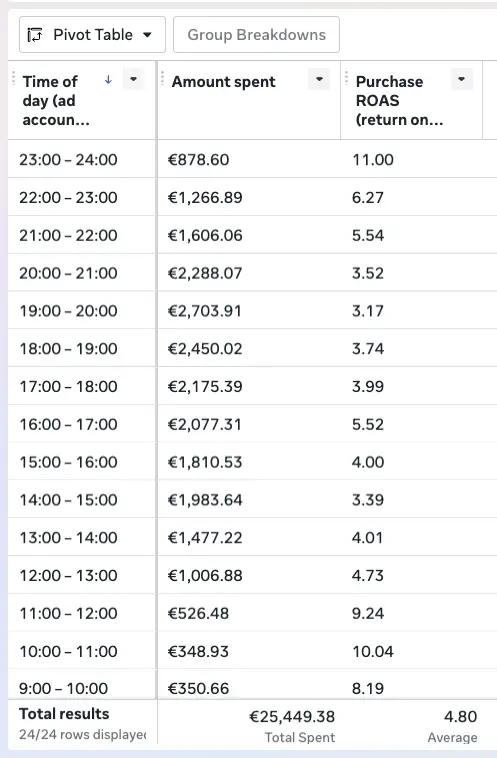
Another case:
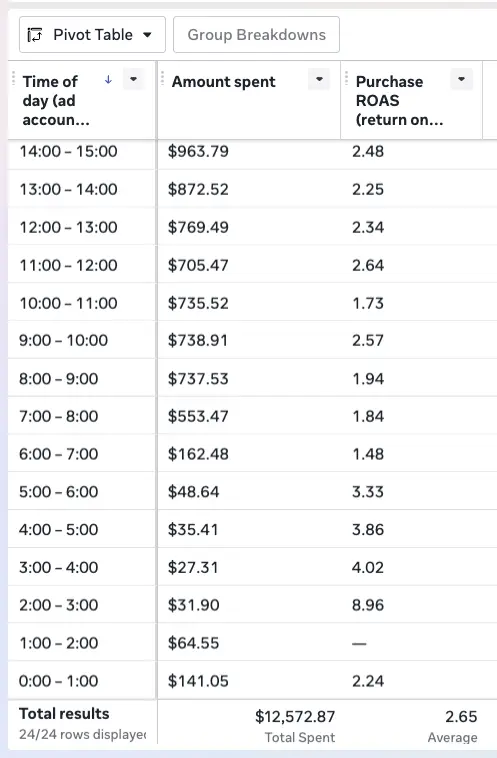
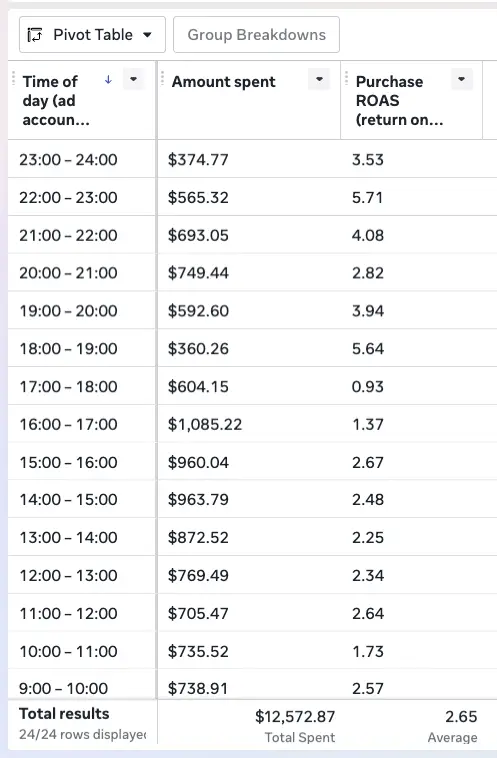
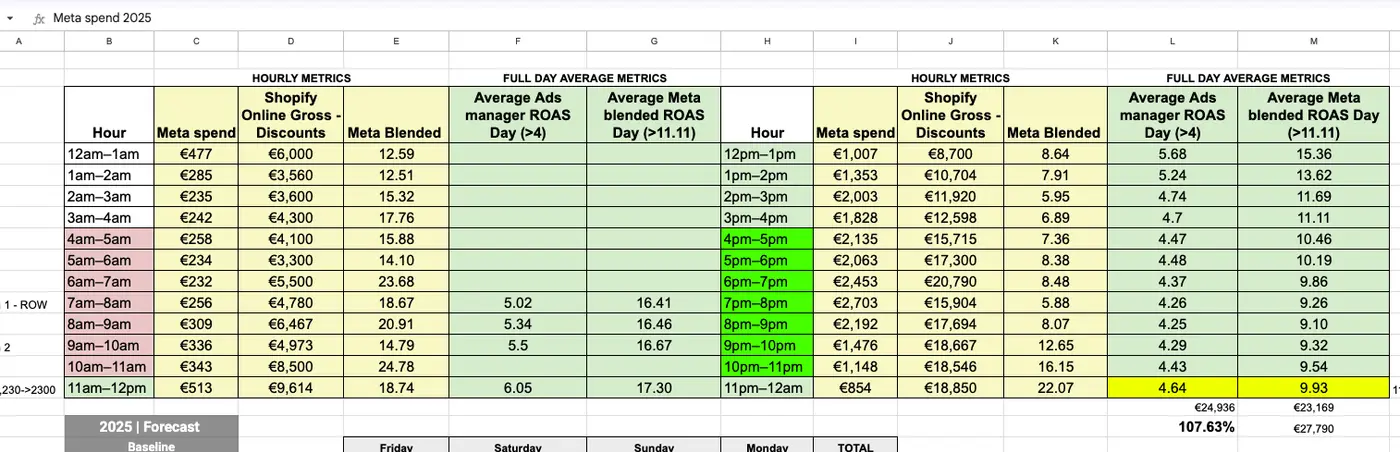
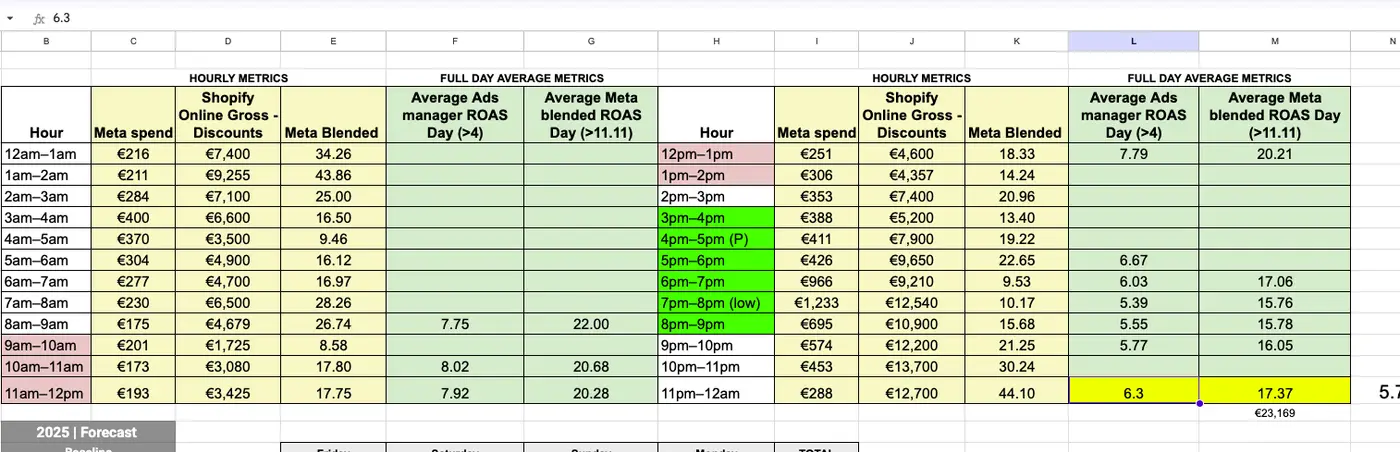
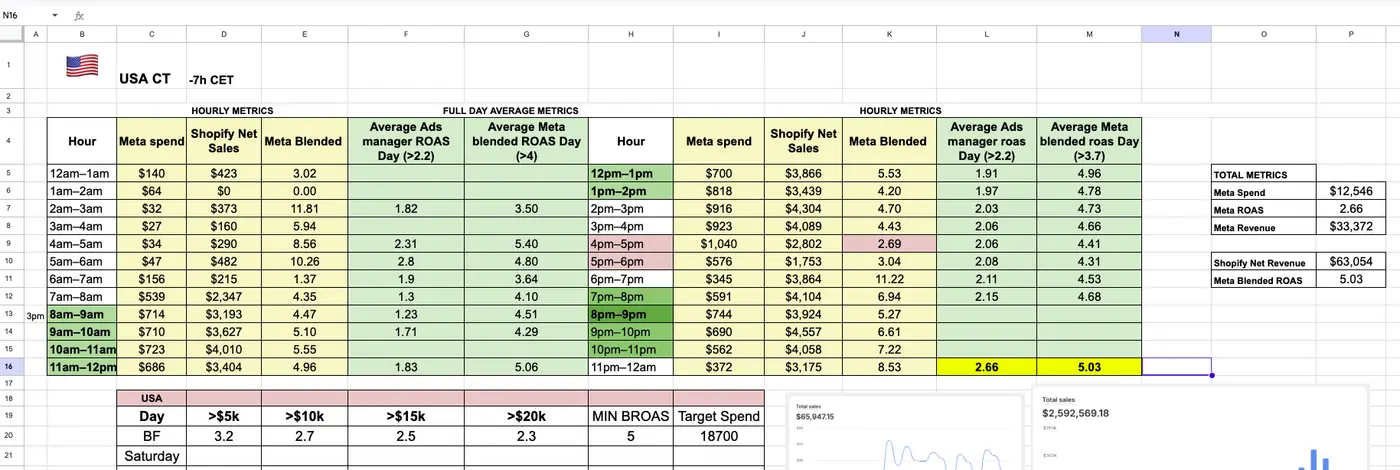
**There is a 15min delay with hourly budget on Meta.
10:01 → 521€
10:15 → 553€
What you need to Wave Surf
- You need to have done all the previous work
Great offer, hype phase, ad creatives, manual bidding, accumulated purchases, …
- Clear Numbers
Min Ads manager ROAS
Min Meta Blended ROAS (total shopify / meta spend)
MER (total shopify / total spend on ads) - Know Your Wave Surfing Patterns
Especially top hours of the day and how did people behave on previous Black Fridays.
How to calculate the “min Meta blended ROAS" from knowing the min ads manager ROAS?
- What approx percentage of my sales come from email
- What approx percentage of my sales come from social media
- What approx percentage of my sales come from Google Ads
- What approx percentage of my sales come from Meta Ads
Example:
20% email, 15% social, 30% Google Ads, 35% Meta Ads
Then if the ads manager ROAS must be at least 2.5,
Your min Meta blended ROAS must be at least 7.14
If Meta ads represents 80% of purchases,
And you want a ROAS of at least 2.5
Then your min blended ROAS will at least be 3.12 (2.5/0.8)
The more important Meta is in your revenue, the closer the ads manager min ROAS will be to the min meta blended.
Why practice matters: Developing the “feeling”
The feeling basically means developing some intuition about how your ad account behaves when you do wave surfing.
We cannot get to Black Friday with zero practice.
We need some practice, for example:
- Halloween weekend
- Sunday November 8th
- Sunday November 15th
- 20th, 21st, 22nd
- What happens if you increase the CBO budget from $250 to $500? How much does that condition the ad account hourly ad spend? And after 3 hours?
- Which one of my campaigns reacts better to intraday changes?
How to execute the strategy
You must have 3 tabs open the whole time:
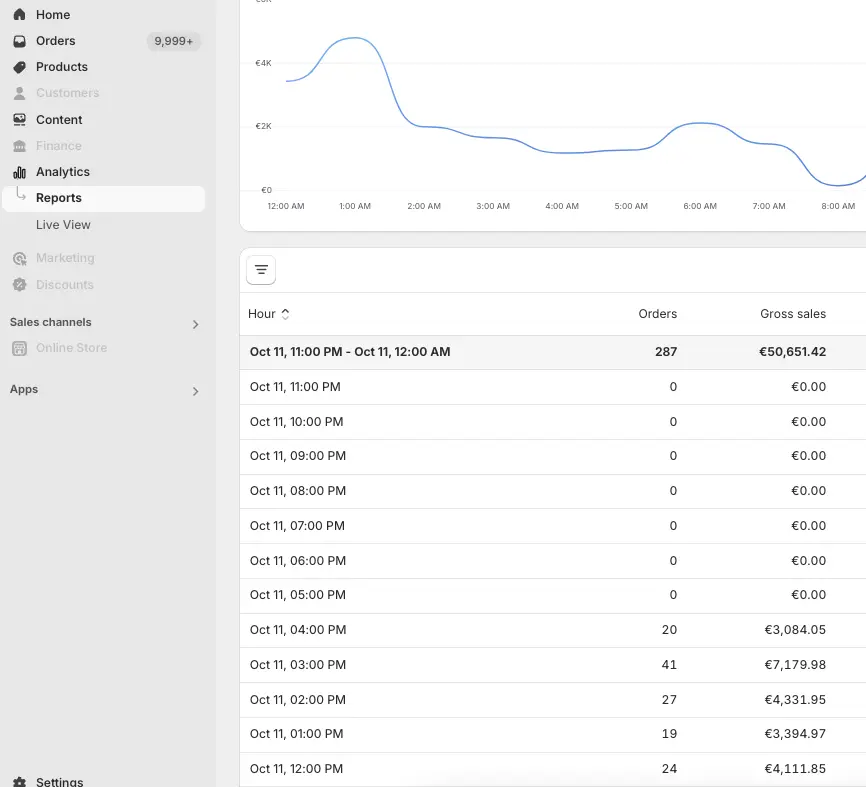
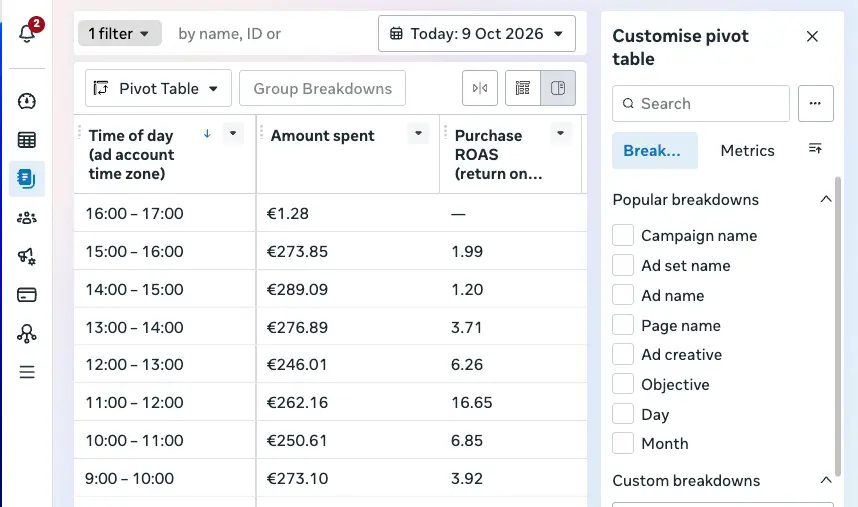
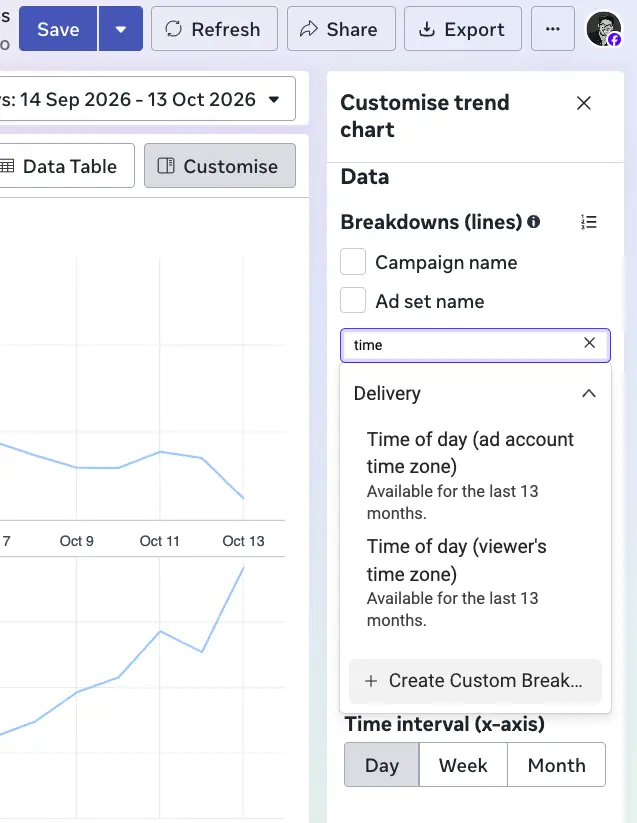
And obviously the ads manager.
I don’t look at the hourly ROAS in the ads manager.
I look at Shopify hourly revenue, and ads manager hourly ad spend, to get the meta blended ROAS.
By how much to increase the budget?
Small increments are NOT enough when we go from looking at results in a 3-day window to looking at results in a 3-hour window.
If you practise, you will quickly realize this.
Example:
I have 5 CBOs at $200/day ($1,000 total daily budget).
This is approx $55/h (I assume 18h of activity).
So if I double the budget in one of the CBOs, $400, my total daily budget goes to $1,200 → $67/h
My hourly ad spend went from 55 to 67, which if I get lucky it might get me 1 extra sale per hour.
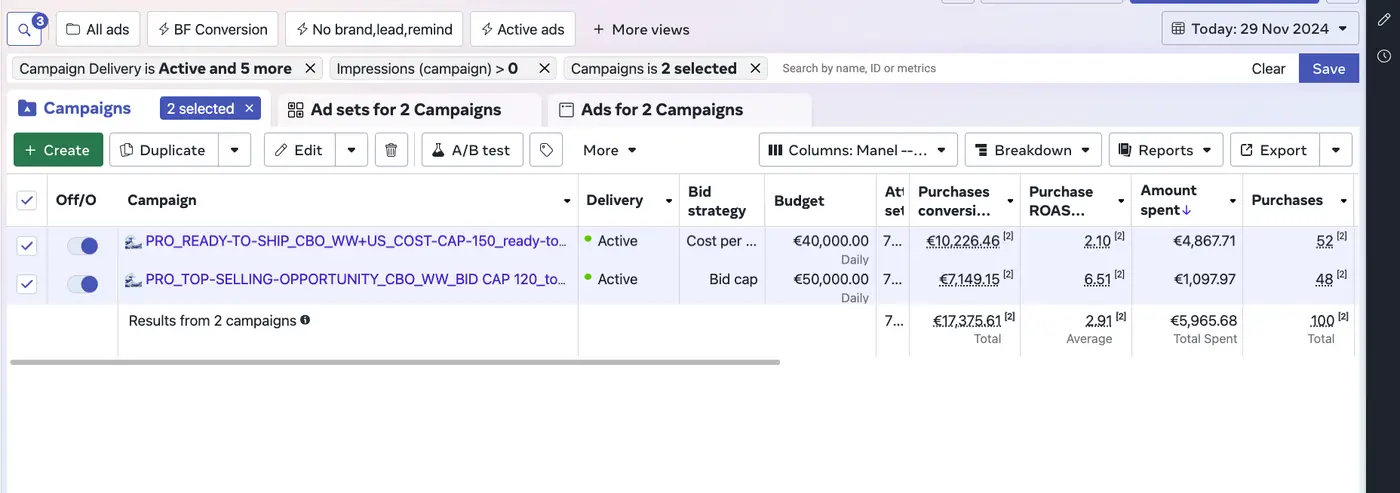
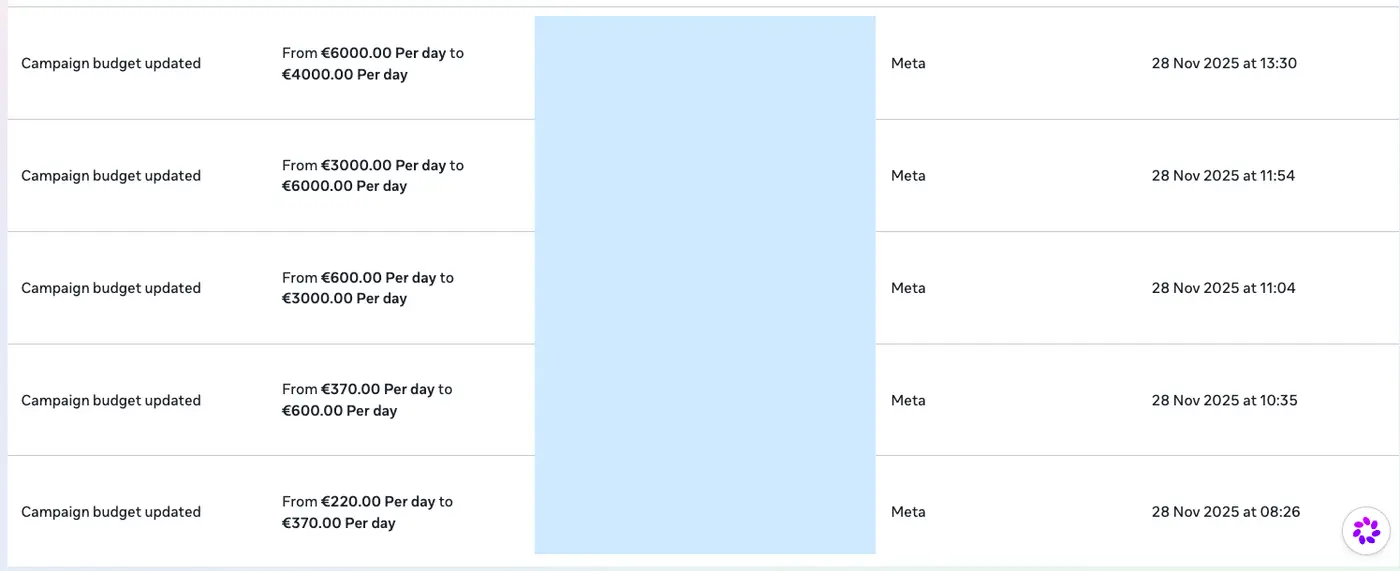
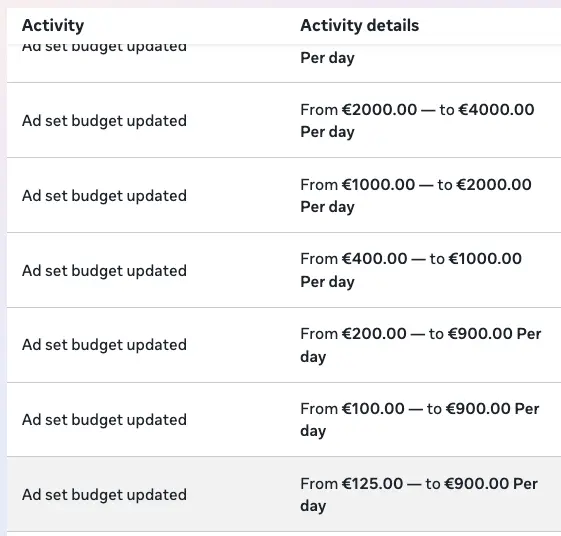
Understanding the “proportional hourly spend” calculation:
- If it’s 11am the morning of Black Friday, and I check the hourly ad spend in the report: $80/hour → As my daily budget is approx $1,500
- And I see it’s too slow,
By putting the ad account to $2,500/day,
I will have a proportional hourly spend of $138/h - So I go from $80 to $138, +58 = 1 or 2 sales
- Is it a lot? No,
This tells us that the budget increments must be bigger.
The Stop-Loss mindset
If we fill up the google sheet template every hour, there’s no possibility of losing money or making big mistakes.
As long as the minimum ROAS is clear, it’s impossible to make mistakes.
You can have 2 bad hours, or you can over-scale at some point, but you have the ability to quickly correct it.
- 9pm = Bad → But I don’t decrease (mistake?)
- 10pm = Disaster hour → CUT, lower the spend ASAP
- 4.25 minimum Meta blended ROAS
I can have 2,3,4 hours below that
Don’t scale if it’s not looking good: For this brand I got to €4k/h the previous year, but this year by the time the peak hours came, I didn’t have the green light. I was on a “below target minimum blended meta ROAS" so I stayed at 1.8-2.2k/hour.
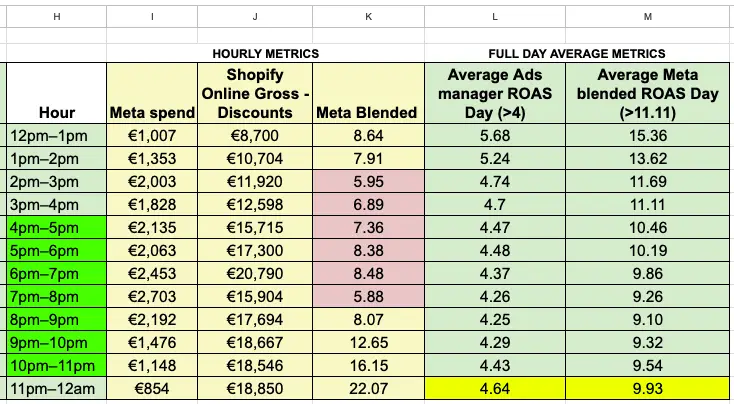
We’re in control all the time.
We see the hourly metrics,
We see the “total daily metrics” updated per hour,
So we can see if we’re on target.
We know our best hours of the day, so we know when to take risks and when to be conservative.
If I make a crazy increase and I have 2 bad hours, no problem, I quickly correct it and stay low.
Better to ask for forgiveness than permission,
Better to take a risk and correct it,
Rather than think “I could’ve gone higher” and then go with this feeling to Saturday and have a bad day.