
Course · Media Buying I
5.4) Meta Ad Account Structure II
Advanced Meta Media Buying I:
5.4) Meta Ad Account Structure II

Structure of this module:
- ABO vs CBO
- Learning phase, structuring for 50 conversions 7-day
- How many ads per ad set?
- How many ad sets in each CBO?
- How many ads for each Advantage+ campaign?
- Consolidation for Scale
1) ABO vs CBO
The eternal debate.
Simple definition:
- ABO: the budget is set at the ad set level
- CBO: the budget is set at the campaign level
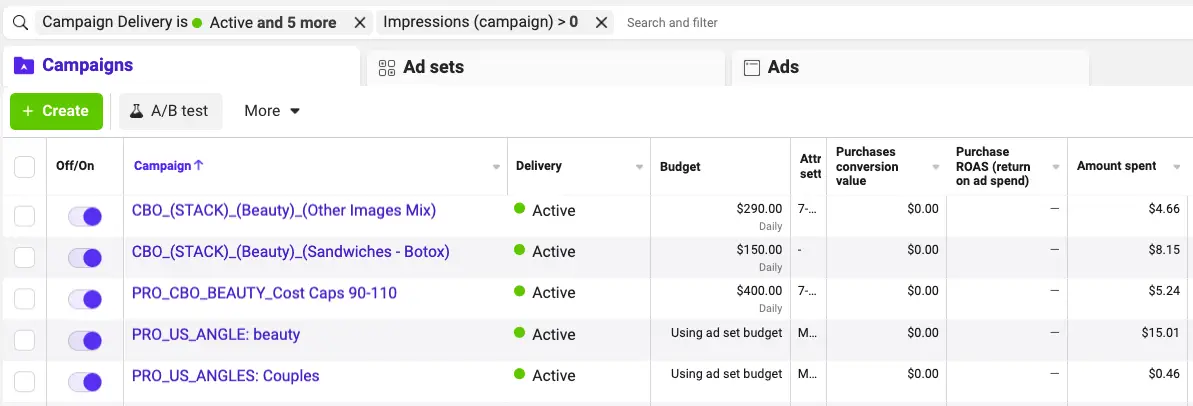
Advantages:
- ABO: more control on the budget, fast results and conclusions, works great to isolate variables
- CBO: lets Meta optimize with their billions of data points
(saves time also when optimizing), scaling consistency
Disadvantages:
- ABO: you can compete against yourself (audience overlap), it takes more time to manage, inconsistency in ROAS when scaling
- CBO: it doesn’t provide solid conclusions for testing, and it takes a bit more time to start working as it has more variables
How to properly use ABO campaigns:
- For testing
- You can vertically scale an ABO campaign, but at certain point you fill find inconsistency and chaos
How to properly use CBO campaigns:
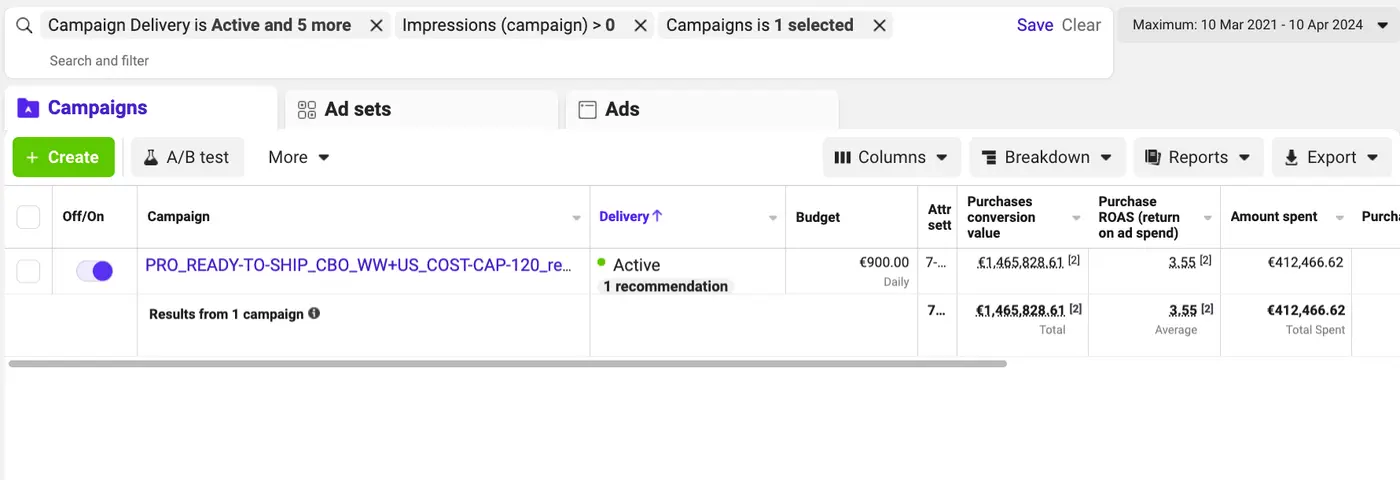
- For scaling
- Stacking and consolidating are key words to have consistency when it comes to scaling the budget
It would be impossible to spend €400k in 1 ad set in ABO, profitably, for an extended period of time.
2) Learning phase: 50 conversions in the 7 days after the last significant edit
Meta works with machine learning.
The more you spend, the more impressions and sales you get, therefore, the smarter the machine becomes at finding the right people to deliver the ad.
From Meta:
“The learning phase is the period when the delivery system still has a lot to learn about an ad set. During the learning phase, the delivery system is exploring the best way to deliver your ad set – so performance is less stable and cost per result is usually worse. The learning phase occurs when you create a new ad or ad set or make a significant edit to an existing one.”
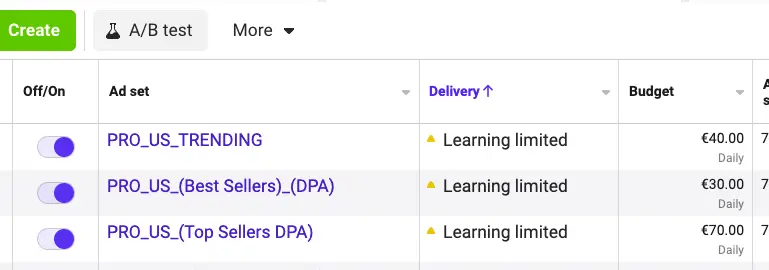
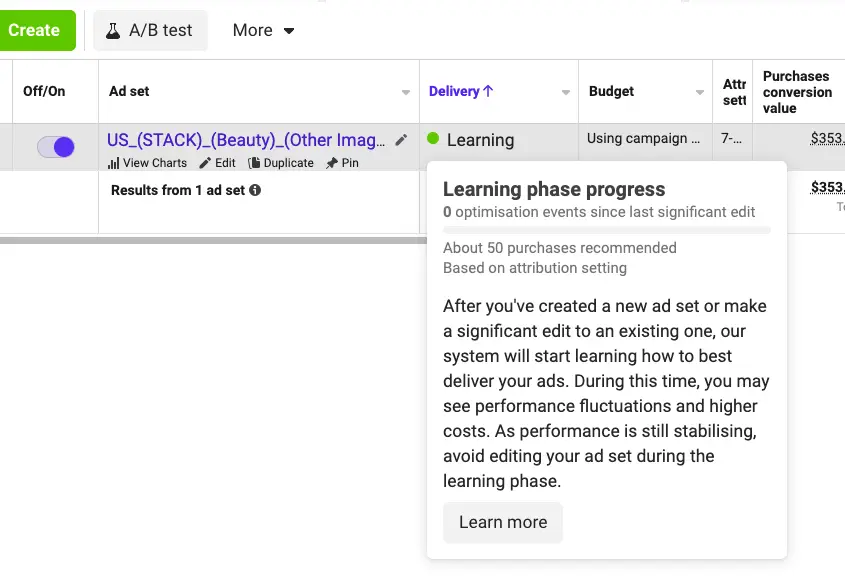
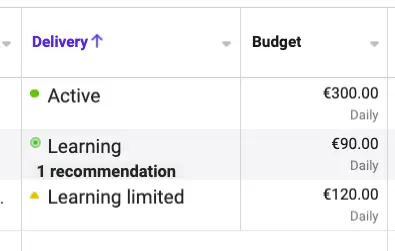
Best Practices to get OUT of the learning phase:
- Don’t have too many ad sets in the account. Stack and consolidate ad sets together (CBO) in order to scale.
- Don’t make unnecessary edits to an ad set before it gets out of the learning phase (changing the budget doesn’t re-enter the learning phase)
- Don’t use super small audiences
- Don’t use super small budgets
“Daily budget to get out of the learning phase”
Example
CPA: 10€
And we want 50 conversions per week,
50x10€ = 500€ weekly budget,
Therefore the minimum daily budget is 500€/7 = 71€/day.
* 71€ is not a good testing budget in my opinion. I start my tests at 25-40€/day. The goal here is for you to understand that any ad set budget under 71€, will keep you in the learning phase. And this will give you inconsistency and low ROAS. So, get to 71€ as fast as possible.
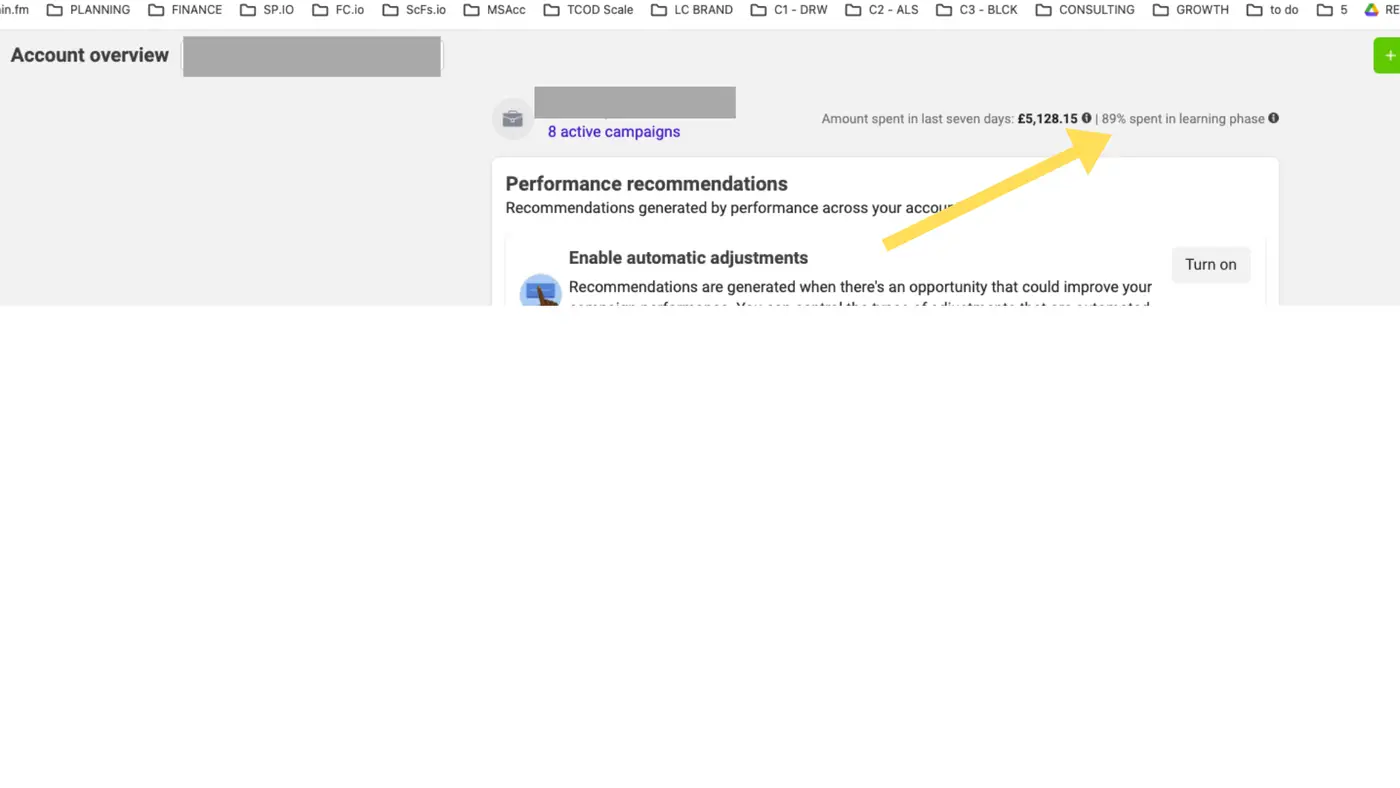
How to see the % of ad spend you have in the learning phase?
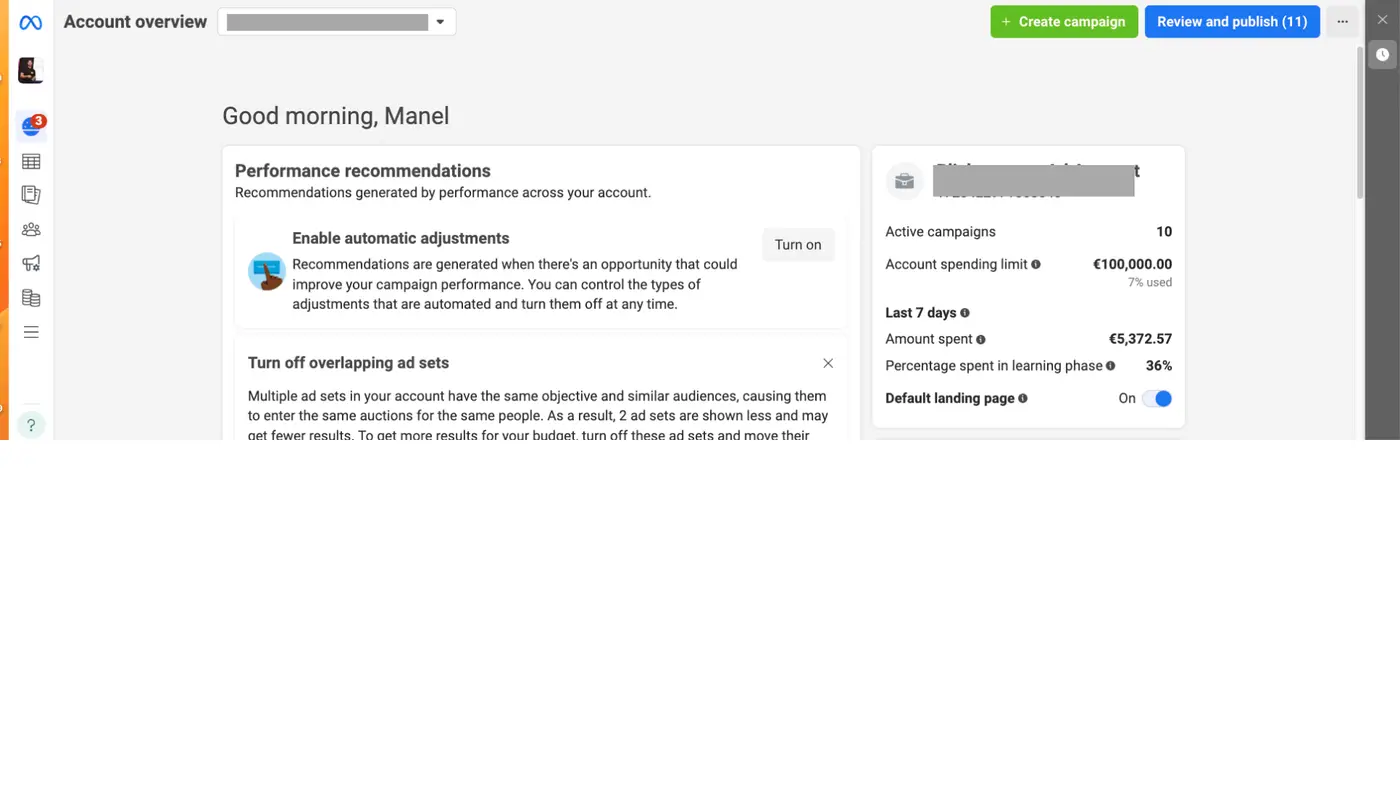
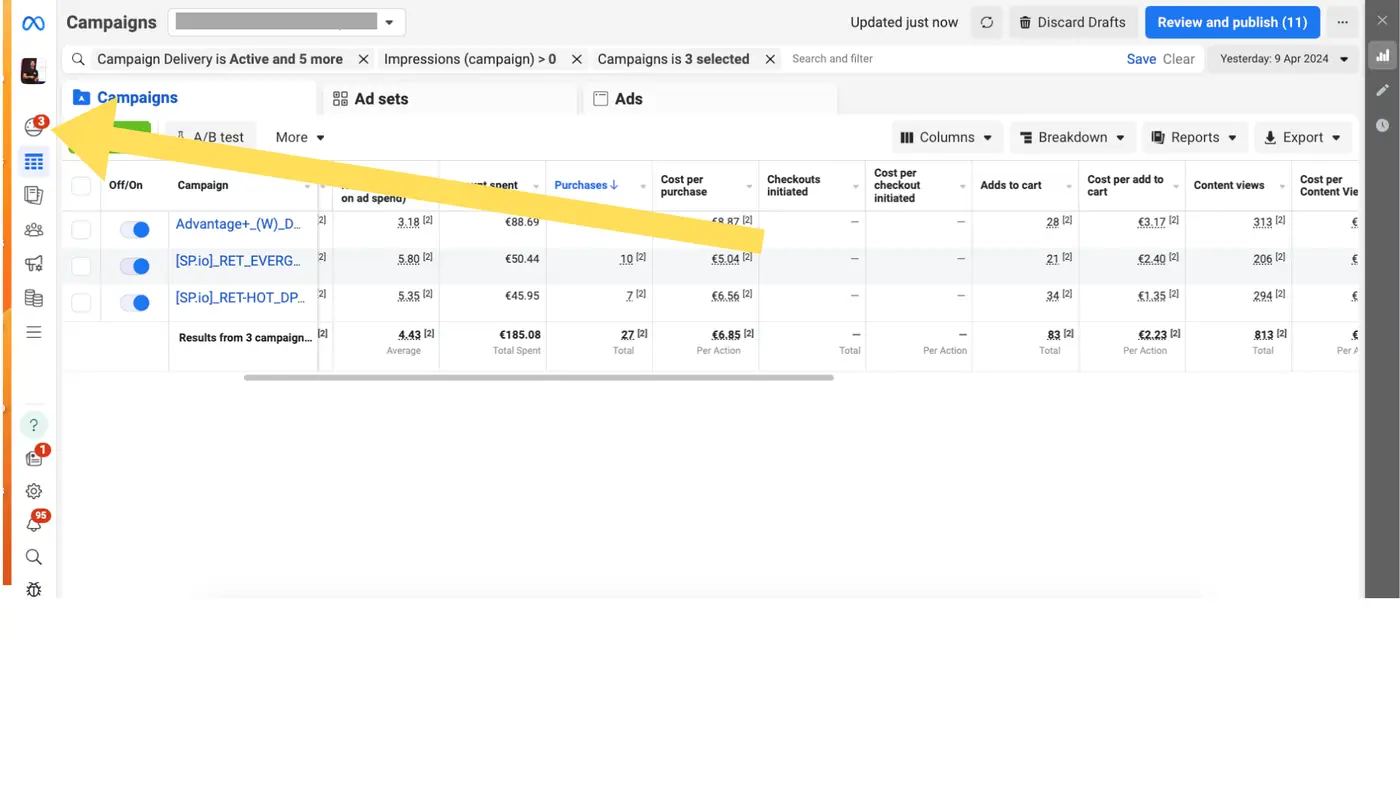
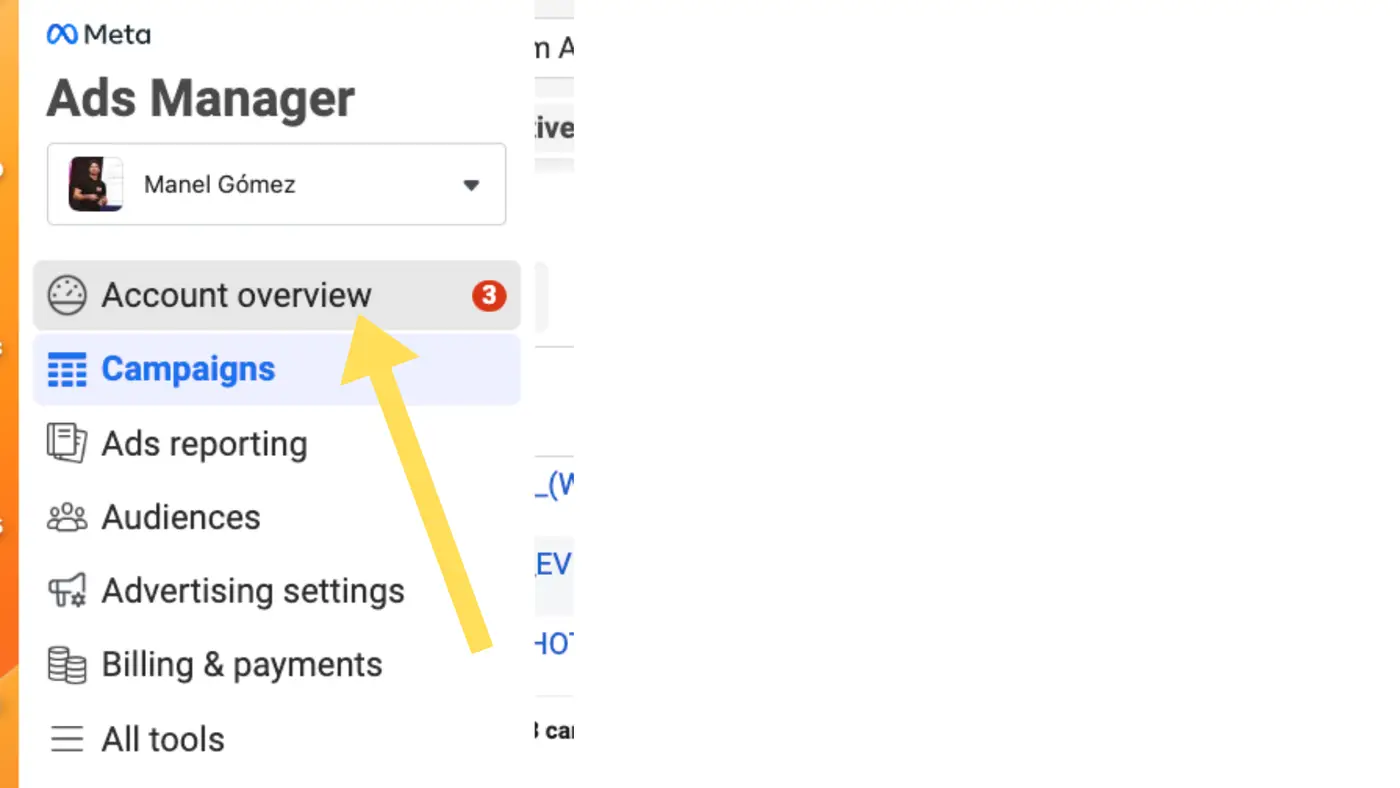
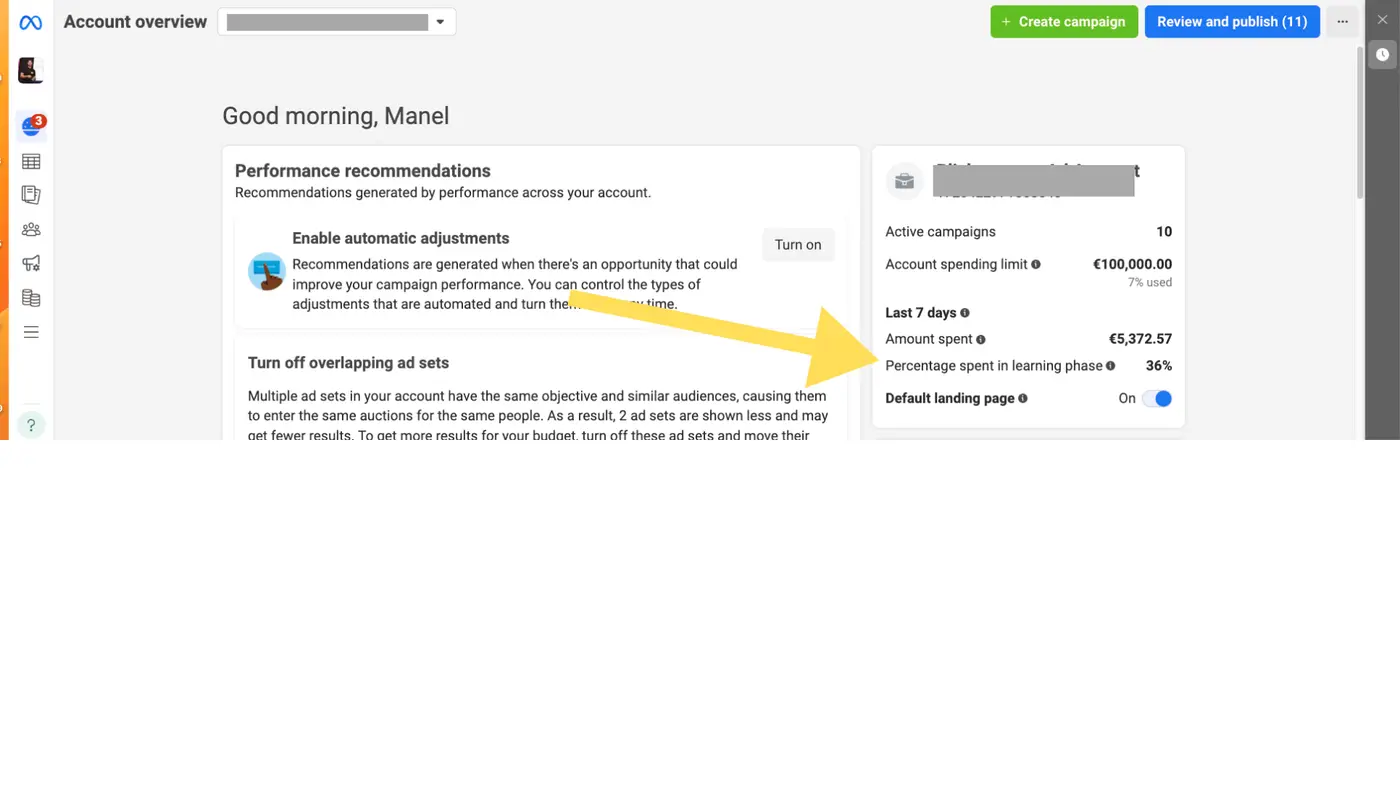
--
3) How many ads per ad set?
- One ad per ad set if the test is very important
(Example: testing one creator against another)
I use this format when I want the budget to distribute equally for the 2 ads. I don’t want one ad to spend 55€ and the other one to spend 1.25€. - 2-5 ads per ad set when they share things in common
(Example: you have 5 images and 5 videos that share the same sales angle. Then I would do 1 ad set for images and 1 ad set for videos) - 5-10 ads per ad set
I only do this for scaling.
In advantage+ or CBO, I put together 5-10 winner ads and let Meta decide where and when to spend the money.
4) How many ad sets in each CBO?
Three.
Can be two or four sometimes.
But as a good practice, three.
If you only have 1, then the CBO doesn’t make sense, just do ABO.
And if you have 5 or more, it’s stupid because the budget will just go to 1 or 2 ad sets. And the other ones will never get out of the learning phase.
5) How many ads for each Advantage+ campaign?
3-6 in my opinion.
3-10 to be more flexible.
1 or 2 is very little.
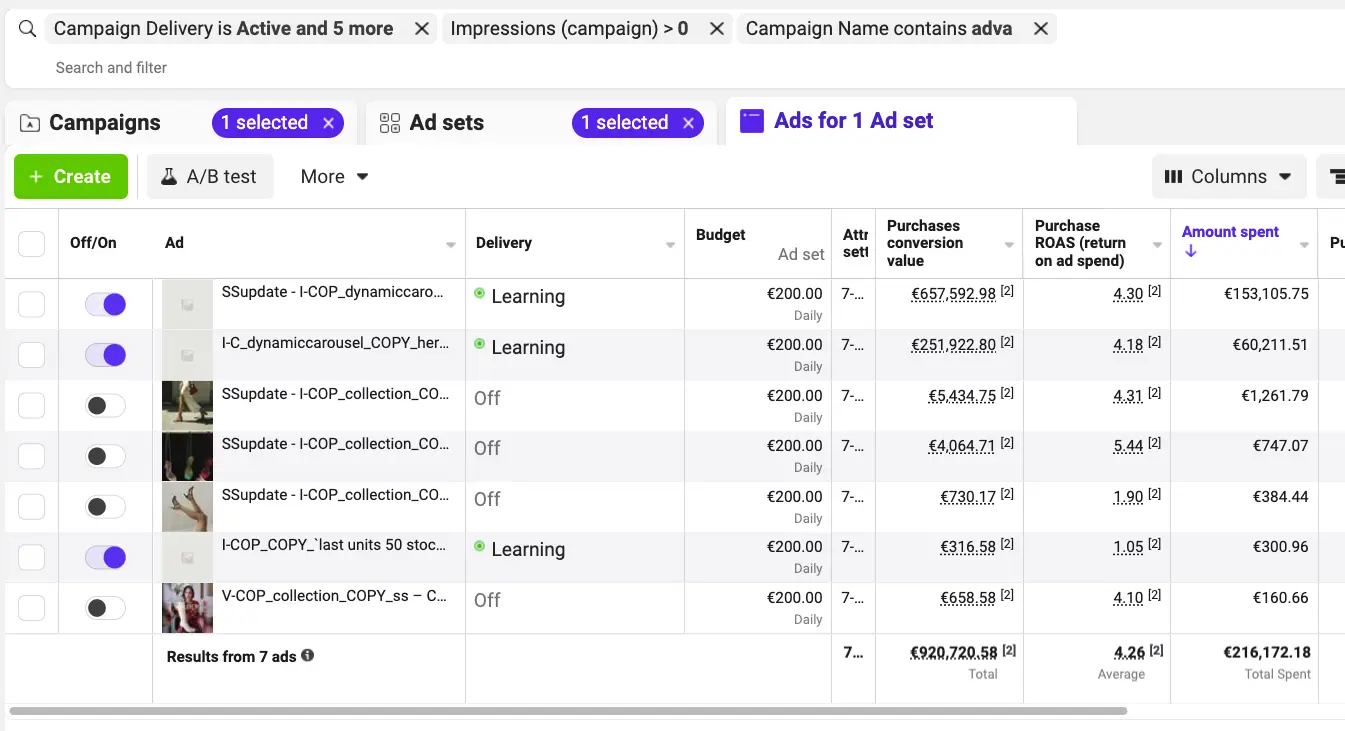
More than 6 is useless in most cases because the budget will go to one or two ads and the rest will not spend anything.
If you do advantage+ with winners, and you have 6 winners in 1 advantage+, only 2 will receive budget. So you’re basically wasting 4 winners.
6) Consolidation for Scale
Simplified: “Put things together and let Meta do the work, in order to scale”.
Ad Account 1: 1,000€ in daily ad spend
- ABO_(Best Sellers)_Testing
- ABO_(Hero Product)_Testing
- RETARGETING
- Advantage+_(Winner Ads April)
- CBO_(Winners Best Sellers)
- CBO_(Winners Hero Product)
Ad Account 2: 1,000€ in daily ad spend
- ABO_(Best Sellers april)_Testing
- ABO_(Best Sellers march)_Testing
- ABO_(Hero Product creator 1)_Testing
- ABO_(Hero Product new ads)_Testing
- ABO_(Hero Product discount)_Testing
- ABO_(Outlet)_Testing
- ABO_(Best Sellers with discount)_Testing
- RETARGETING
- CBO_(Winner Ads Best Sellers april)
- CBO_(Best Sellers march)
- Advantage+_(Best Sellers march)
- CBO_(Winner Ads Hero Product creator 1)
- CBO_(Winner Outlet)
- CBO_(Winner Ads Hero Product new ads)
More about this in the scaling module.